
1. Characteristic Analysis of HPMC in Concrete and Mortar
Hydroxypropyl Methylcellulose (HPMC) is a widely used cellulose ether in cement-based materials. It plays an important role in controlling water retention, rheology, workability, adhesion, and resistance to segregation. These properties make HPMC particularly valuable in mortar, tile adhesives, renders, repair materials, self-leveling compounds, and specialized concrete systems.
However, HPMC also presents several challenges. While it improves workability and water retention, excessive or poorly optimized HPMC can negatively affect fluidity, density, setting behavior, and mechanical strength. Understanding both sides of the material is therefore essential when designing high-performance concrete and mortar formulations.
1.1 Core Advantages of HPMC: A Multifunctional Additive
1.1.1 Excellent Water-Retention Performance
Water retention is one of HPMC’s most important functions. Cement hydration requires sufficient water, while dry substrates such as masonry, concrete blocks, and wall surfaces can rapidly absorb water from fresh mortar.
Without adequate water retention, the cement paste can lose moisture before hydration is sufficiently developed. This may contribute to poor adhesion, surface defects, shrinkage, and cracking.
When HPMC dissolves in water, it increases the viscosity of the liquid phase and contributes to the formation of a protective polymeric structure around cement particles. This helps reduce rapid water migration and evaporation. As a result, the cementitious system can retain moisture for a longer period, supporting more consistent hydration and improving application performance.
1.1.2 Precise Control of Rheological Properties
HPMC is also an effective thickening and rheology-modifying agent. Even relatively small quantities can noticeably change the viscosity and consistency of cement-based mixtures.
This creates a smoother, more cohesive working texture. It can also reduce segregation and improve the handling characteristics of mortar. In tile adhesives and vertical applications, HPMC can contribute to anti-sag performance by increasing the yield stress of the fresh material.
This is particularly useful when heavy tiles or thick layers of mortar must remain in position on vertical surfaces. Properly selected HPMC helps balance open time, adhesion, spreadability, and resistance to sliding.
1.1.3 Thermal Gelation Characteristics
HPMC has a distinctive temperature-dependent solubility behavior. It dissolves in water under appropriate conditions and can undergo thermal gelation as temperature increases.
In cement-based systems, this characteristic can contribute to changes in rheological behavior during the early stages of hardening. Since cement hydration generates heat, the temperature-dependent behavior of HPMC can influence the structure and consistency of the material.
The actual effect depends strongly on the HPMC grade, substitution level, concentration, cement chemistry, and environmental conditions. Therefore, thermal gelation should be considered as part of formulation design rather than treated as a universal performance mechanism.
1.1.4 Improved Anti-Washout Behavior
HPMC can also be valuable in applications where resistance to water-induced dispersion is important. In underwater or highly wet environments, maintaining cohesion is critical because cementitious particles can otherwise separate from the mixture.
By increasing viscosity and cohesion, HPMC can help reduce material washout and particle dispersion. This makes cellulose-ether-modified formulations potentially useful for specialized underwater non-dispersible concrete and repair applications.
2. Inherent Disadvantages of HPMC
Despite its many benefits, HPMC is not a perfect additive. Its effects depend on dosage, molecular weight, viscosity grade, cement composition, water-to-binder ratio, aggregate grading, and mixing conditions.
2.1 Potential Reduction in Mechanical Strength
One of the major concerns associated with excessive HPMC addition is reduced hardened strength. Increasing HPMC content can increase air entrainment and modify the pore structure of cement-based materials.
Additional entrapped air can increase total porosity and reduce hardened density. Because compressive strength is strongly influenced by pore structure and matrix compactness, excessive air content may result in lower mechanical performance.
HPMC can also influence cement hydration and setting behavior. While delayed hydration can sometimes be beneficial for workability, excessive retardation may slow early strength development.
For applications requiring high compressive or flexural strength, HPMC dosage must therefore be carefully optimized rather than simply increased to achieve better workability.
2.2 Mechanisms Behind Strength Reduction
The relationship between HPMC and strength is complex. Two important mechanisms are air entrainment and changes in hydration kinetics.
First, HPMC can stabilize microscopic air bubbles within fresh mortar. These bubbles may remain in the hardened material and increase porosity. Second, the polymer can modify the movement of water and cement particles, potentially influencing hydration and setting.
Consequently, a formulation with excellent water retention may not automatically provide the highest hardened strength. The goal is to establish an appropriate balance between fresh-state performance and final mechanical properties.
2.3 Reduced Fluidity at Higher Dosages
The thickening effect of HPMC can also reduce fresh mortar fluidity. As viscosity increases, the material may become more difficult to spread, pump, or level.
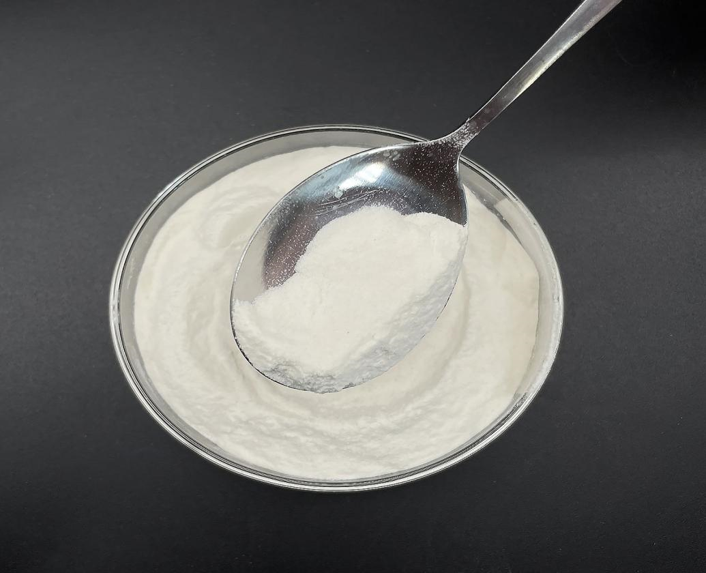
This creates an important formulation challenge. A low-viscosity mixture may be easy to apply but lack sufficient cohesion and water retention, while an excessively viscous mixture may resist sagging but become difficult to process.
The problem can become more noticeable under high water-to-cement or high-shear conditions. Consequently, selecting the correct HPMC grade and dosage is essential for maintaining both workability and stability.
3. TRUNNANO Nano-Modification Technology: Addressing HPMC Performance Challenges
Nano-modification provides a potential pathway for improving the balance between fresh and hardened properties. TRUNNANO focuses on combining HPMC with functional nanomaterials to create an organic-inorganic composite system.
One potential approach involves materials such as amorphous nano-silica. Because nanoparticles possess extremely high specific surface areas, they can interact with cement hydration products and modify the microstructure of the hardened matrix.
3.1 Triple Compensation Effects of Nanoparticles
3.1.1 Densification and Filling Compensation
Nanoparticles can occupy extremely small spaces within cementitious matrices. Their fine particle size allows them to interact with voids between larger cement particles and hydration products.
When appropriately dispersed, nano-silica can contribute to matrix densification and reduce certain microstructural defects. This may partially compensate for the porosity increase associated with excessive polymer modification.
The result is a potentially denser cementitious structure with improved mechanical integrity.
3.1.2 Nucleation and Hydration Promotion
Nano-silica can also act as a nucleation surface for cement hydration products. Its high surface area provides sites where hydration products can develop.
In addition, reactive amorphous silica can participate in pozzolanic reactions with calcium hydroxide, contributing to additional calcium-silicate-hydrate formation under suitable conditions.
This combination of nucleation and pozzolanic activity can help refine the microstructure and potentially improve strength development.
3.1.3 Interfacial Strengthening
The interface between cement paste and aggregate is another critical region within concrete and mortar. Defects in the interfacial transition zone can become weak points where cracking begins.
A properly designed nano-modified system can refine this region by promoting a more compact microstructure and reducing certain microscopic defects. The interaction between HPMC and nanoparticles may therefore provide a more balanced combination of workability, cohesion, and mechanical performance.
4. Potential Breakthrough: Balancing Water Retention and Strength
The major attraction of nano-modified HPMC technology is its potential to reduce the traditional trade-off between workability and strength.
HPMC provides water retention, viscosity control, adhesion, and anti-sag behavior, while carefully selected nanoparticles can contribute to matrix densification and hydration-related improvements.
In specialized formulations, the combination may therefore help maintain the fresh-state benefits of HPMC while reducing some of its negative effects on hardened performance.
However, performance claims should always be evaluated through controlled laboratory testing. Results can vary according to cement type, aggregate characteristics, HPMC grade, nanoparticle type, dosage, dispersion quality, curing conditions, and water-to-binder ratio.
5. Quality Assurance and Formulation Control
The performance of HPMC depends on multiple material characteristics, including viscosity, substitution level, particle size, dissolution behavior, and chemical composition.
For nano-modified systems, dispersion quality is equally important. Nanoparticles that agglomerate instead of dispersing uniformly may not provide the intended microstructural benefits.
TRUNNANO’s approach emphasizes formulation control and product customization. By considering the interaction between HPMC and nano-additives, manufacturers can develop formulations for specific applications rather than relying on a one-size-fits-all additive dosage.
| Performance Dimension | Traditional HPMC | Nano-Modified HPMC Approach |
|---|---|---|
| Water Retention | Excellent | Designed to maintain strong water retention |
| Workability | Good when properly dosed | Can be optimized alongside nano-additives |
| Strength | May decrease at excessive dosage | Potential for improved strength retention |
| Density | Excessive air may reduce density | Nano-filling can support matrix densification |
| Hydration | May influence or retard hydration | Nano-nucleation may promote hydration |
| ITZ | Can contain microstructural weaknesses | Potential for interface refinement |
| Air-Void Structure | May increase entrained air | Can be optimized through formulation |
| Overall Performance | Requires a strength/workability trade-off | Aims to achieve a more balanced performance |
6. Application Value of Nano-Modified HPMC
6.1 High-Performance Mortar and Concrete
Nano-modified HPMC can be considered for high-performance mortar and concrete where water retention and workability are required without compromising mechanical properties.
Such formulations may be particularly valuable in demanding repair materials, high-strength mortars, grouting systems, and specialized cementitious products.
6.2 3D-Printing Construction Materials
Construction 3D printing requires a careful balance between extrudability, buildability, shape retention, and final strength.
HPMC can provide the rheological control necessary for maintaining printed layers, while nano-modification may help improve the hardened microstructure. This makes nano-modified polymer systems an interesting area for advanced additive-manufacturing materials.
6.3 Underwater Non-Dispersible Concrete
Underwater concrete requires strong cohesion and resistance to washout. HPMC can contribute to viscosity and material stability, while nano-modification may help improve the resulting cementitious matrix.
The combination can therefore be explored for underwater construction, repair, grouting, and other wet-environment applications.
6.4 Specialty Mortars
Self-leveling compounds, repair mortars, tile adhesives, and grouting materials all require carefully balanced fresh and hardened properties.
Nano-modified HPMC systems may help formulators address the competing requirements of flowability, water retention, adhesion, anti-sag performance, dimensional stability, and strength.
7. TRUNNANO: Advancing Nano-Modified Concrete Admixtures
TRUNNANO, also known as Luoyang Tongrun Info Technology Co., Ltd., was established in 2014 and focuses on nano-modified materials and concrete admixture technologies.
Its approach to nano-modified HPMC centers on creating an organic-inorganic composite network that seeks to combine the practical advantages of HPMC with the microstructural benefits of nanomaterials.
The broader objective is to move beyond the traditional compromise between water retention and mechanical strength. Instead of viewing HPMC only as a viscosity and water-retention additive, nano-modification treats the cementitious system as an integrated microstructural network.
For manufacturers and construction-material developers, this approach can provide a pathway toward more precisely engineered mortar and concrete formulations. Through appropriate material selection, dosage optimization, dispersion control, and performance testing, nano-modified HPMC has the potential to support the development of stronger, more durable, and more functional cement-based materials.
The future of high-performance concrete and mortar will increasingly depend on this type of multi-scale formulation strategy, where polymers, cement hydration products, aggregates, and nanoparticles are engineered to work together rather than independently.